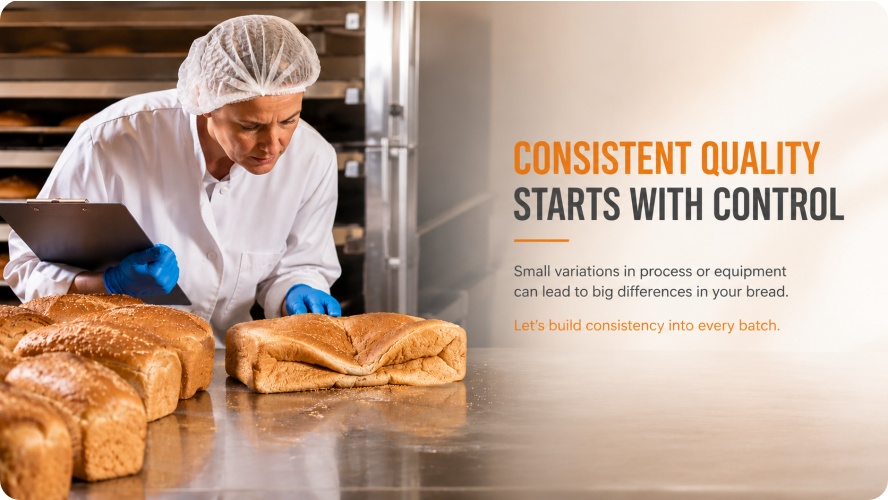
Cuando el pan se ve alto en el horno pero se desinfla después de hornearlo, el problema rara vez es casual. Un centro hundido, una corteza arrugada o un pan que se deforma al enfriarse generalmente significa que la estructura de la masa no fue lo suficientemente fuerte como para contener el gas generado durante la fermentación y el horneado. En una panadería pequeña, esto puede resultar en el desperdicio de algunos panes. En una línea de producción comercial, el mismo problema puede reducir el rendimiento, retrasar el empaquetado y generar quejas de los clientes.
La buena noticia es que el pan que se desinfla suele deberse a una lista corta de causas: fermentación excesiva, desarrollo débil del gluten, exceso de humedad, control deficiente de la temperatura de horneado o problemas de enfriamiento. Al revisar cada etapa del proceso, las panaderías pueden corregir la causa raíz en lugar de adivinar lote por lote.
¿Qué significa el colapso del pan?
Un pan deshecho pierde parte o la totalidad de su estructura después de hornearlo. En lugar de mantener su forma redondeada, el pan se hunde en el centro o en los lados.
Los síntomas típicos incluyen:
Estos indicios señalan que la estructura interna no era lo suficientemente fuerte como para sostener el pan después de sacarlo del horno.
Las principales razones por las que el pan se desmorona después de hornearlo.
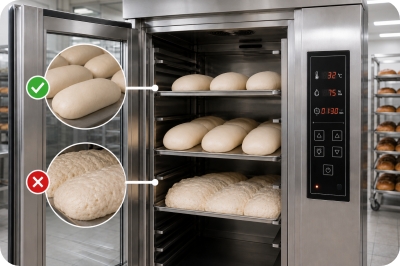
Causa 1: Masa fermentada en exceso
Una de las razones más comunes por las que el pan se desinfla es la sobrefermentación.
Durante la fermentación, la levadura produce dióxido de carbono que expande la masa. Si la fermentación se prolonga demasiado, la red de gluten se estira más allá de su límite. Para cuando el pan entra en el horno, tiene poca fuerza para soportar una mayor expansión.
Al principio, la masa puede levar rápidamente, pero una vez que el gluten debilitado ya no puede retener el gas, el pan se desinfla.
Para evitar que la masa fermente demasiado, es importante vigilarla en lugar de guiarse únicamente por el reloj. La temperatura, la humedad, la cantidad de levadura y la composición de la masa influyen en la velocidad de fermentación.
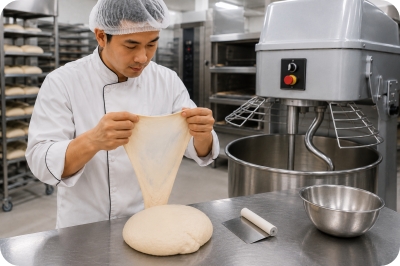
Causa 2: Gluten subdesarrollado
El gluten forma la estructura interna que sostiene las burbujas de gas en expansión.
Si el gluten no se desarrolla correctamente durante el amasado, la masa no retendrá suficiente gas durante la fermentación y el horneado. El pan puede parecer aceptable durante el levado, pero se desinflará en cuanto escape el vapor interno tras el horneado.
Las causas comunes incluyen:
Las panaderías profesionales suelen controlar el desarrollo de la masa en lugar de amasarla durante un número fijo de minutos, ya que el rendimiento de la harina puede variar de un lote a otro.
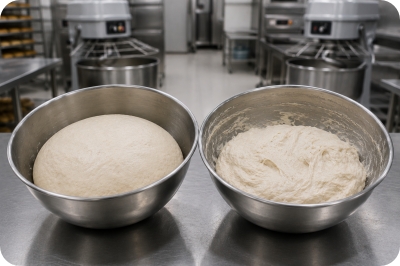
Causa 3: Demasiada agua o una fórmula desequilibrada
Una alta hidratación puede mejorar la suavidad, pero un exceso de agua puede desestabilizar el pan si no se ajustan la fórmula y el proceso. El exceso de humedad retrasa la cuajada y puede debilitar el centro tras el horneado. Un exceso de azúcar, grasa o actividad enzimática también puede afectar la estructura, ya que estos ingredientes modifican la velocidad de fermentación, el color de la corteza y la consistencia de la miga.
Para las fábricas, el control de la fórmula es una disciplina de producción. Los ingredientes deben pesarse con precisión, la absorción de la harina debe comprobarse al cambiar de lote y los ajustes de la receta deben registrarse. Incluso una pequeña variación en la calidad de la harina o la temperatura del agua puede afectar la estabilidad del pan a gran escala.
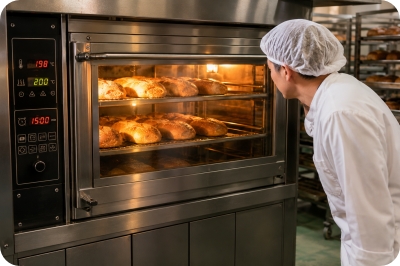
Causa 4: La temperatura del horno y el tiempo de cocción son importantes.
Un pan debe consolidar su estructura antes de salir del horno. Si la temperatura del horno es demasiado baja, el pan puede expandirse lentamente pero no lograr una consistencia firme. Si el tiempo de horneado es demasiado corto, el centro puede quedar crudo incluso cuando la corteza tenga buen aspecto. Tras enfriarse, la estructura interna blanda se contrae y el pan se desinfla.
El calor desigual puede generar el mismo problema. En un horno de solera, un horno rotatorio o un horno de túnel, una mala distribución del calor puede provocar que algunos panes se horneen correctamente mientras que otros queden poco hechos en el centro. Por eso, las panaderías comerciales deben verificar la temperatura real del horno, no solo la que aparece en la pantalla. La calibración periódica, la revisión de la rotación de las bandejas y la comprobación de la temperatura interna del producto ayudan a prevenir la cocción insuficiente oculta.
Como práctica habitual en la producción, los operarios deben evaluar conjuntamente el volumen del pan, el color de la corteza, la temperatura de la miga y el rendimiento del enfriamiento. Una corteza atractiva no siempre garantiza que el pan esté completamente estabilizado.
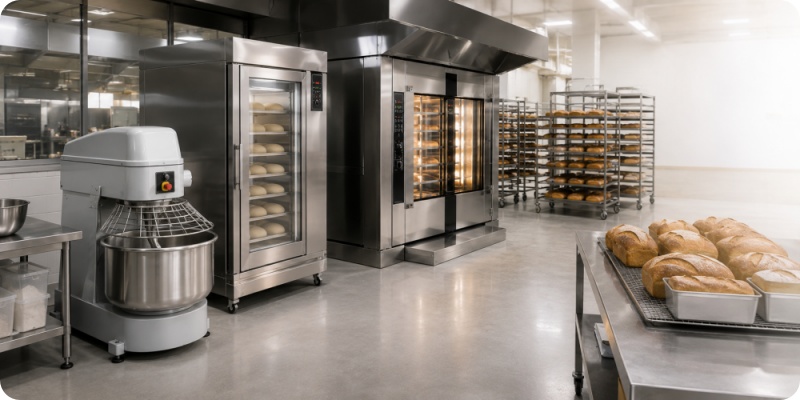
Cómo las panaderías comerciales evitan el colapso del pan
Las grandes panaderías rara vez se basan en conjeturas. En cambio, monitorean varias variables clave de producción a lo largo del proceso.
Al registrar estas variables para cada lote, las panaderías pueden identificar rápidamente qué cambió cuando varía la calidad del producto.
La uniformidad se logra mediante el control del proceso, en lugar de simplemente repetir la misma receta.
Lista de verificación sencilla para la resolución de problemas
Si tu pan se desinfla después de hornearlo, hazte estas preguntas:
¿La masa fermentó demasiado tiempo?
¿El gluten estaba completamente desarrollado?
¿La hidratación de la harina era la adecuada?
¿Se horneó el pan el tiempo suficiente?
¿El horno estaba precalentado correctamente?
¿Ha cambiado la harina recientemente?
¿Se enfrió el pan correctamente antes de envasarlo?
Revisar cada paso de forma sistemática es mucho más eficaz que cambiar varias variables a la vez.
¿Busca resultados de horneado más consistentes?
Con47 años de experiencia en fabricación.yExporta a más de 120 países.Ayudamos a las panaderías a mejorar la consistencia de sus productos y la eficiencia de su producción.

HONGLINGOfrece soluciones completas para panadería, incluyendo: • Laminadoras de masa•Fermentadoras de masa•Hornos rotatorios de carro•Hornos de piso • Mezcladoras espirales •Soluciones de refrigeración
suscríbase a nosotros, puede obtener el contenido de nuestro producto más reciente, noticias y actualizaciones exclusivas, los últimos eventos locales


online service






 +8613066853339